Millions Watched Strangers Cry Over Found Family Photos. Here's Why.
A guy who returns thrift-store photos to strangers has millions of followers, and the comment sections are full of tears. It's not really about the photos.

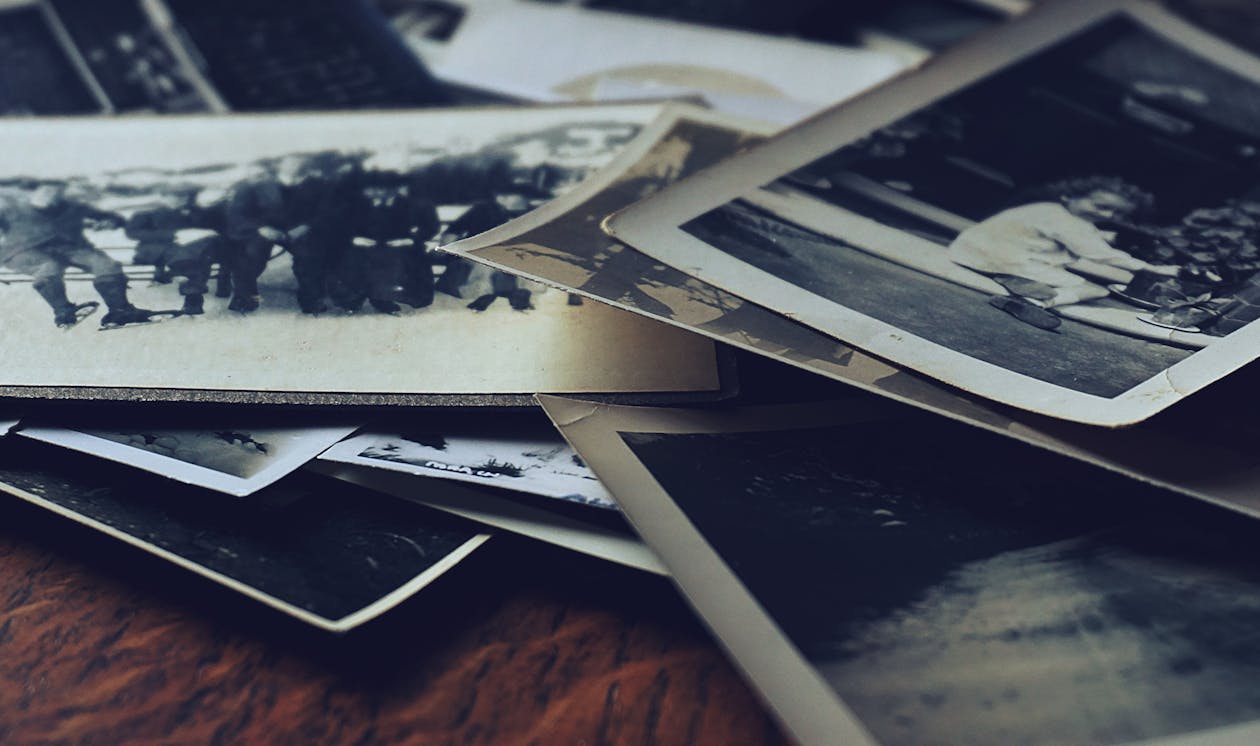
There's a small, strange corner of the internet built entirely around one idea: someone finds a box of old photographs at a thrift store, tracks down the family they belong to online, and films the moment of handing them back. That's it. That's the whole format. And it has racked up hundreds of millions of views.
Watch the comment sections and a pattern shows up fast. People aren't just saying "nice." They're saying things like "I'm sobbing at my desk" and "this made me call my mom." Grown adults, crying, over photos of complete strangers.
Why I couldn't stop watching one of these
I found one of these videos late one night, half-asleep, scrolling for nothing in particular, and ended up watching six in a row. By the third one I wasn't really watching the strangers on screen anymore — I was thinking about a specific drawer in my own house, the one I keep meaning to sort, the one with photos I genuinely couldn't tell you the current condition of. I felt something close to embarrassment, honestly, watching this man hand a shoebox back to a family who'd been searching for it for years, while my own equivalent shoebox sat two rooms away, un-scanned, un-backed-up, quietly not being anyone's problem until it suddenly was. I didn't cry at the video. I did get up afterward and take four photos with my phone before going back to bed.
It was never really about the photos
Nobody watching actually knows the people in these thrift-store photographs. What they're reacting to isn't the specific faces — it's the category of loss. Every person watching has their own version somewhere: a box in a parent's attic, a stack of prints nobody's scanned, a grandmother's photo album that'll go... somewhere, eventually, when nobody's quite sure.
The videos aren't sad because a stranger lost their photos. They're sad because it's a preview. A little rehearsal of the thing everyone's quietly afraid of: that the record of someone's life could end up in a thrift store bin, disconnected from anyone who remembers what it meant.
Why the reaction is relief, not just grief
The best part of these videos isn't the finding — it's the returning. The photos make it back. The story reconnects with the people it belongs to. That's the part that gets people, more than the sadness does: proof that it's not always too late, that these things can still find their way home if someone cares enough to try.
That's the whole appeal, really. Not "isn't this sad" — "isn't it a relief when it works out."
The uncomfortable follow-up question
If a box of photos ending up in a thrift store — disconnected from any story, any name, any family — makes you well up watching a stranger's TikTok... what's actually happening to the boxes in your own house? Nobody's filming them. Nobody's going to track your family down in twenty years and return them with a viral video attached. That part only happens for the lucky ones who get discovered.
The rest just... don't.
Skip the viral rescue. Do the boring version now.
The unglamorous version of this story — a photo, scanned, labeled with a name and a year, kept somewhere findable — doesn't get a million views. It also doesn't need a stranger with a following to save it. It just needs you, and about thirty seconds.
---
Stella Memoria gives photos and the stories behind them a home that doesn't depend on luck, an algorithm, or a stranger finding them first.
To send it to someone, or to post it.