Your Grandmother Is the Last Person Alive Who Knows Who These People Are
The things only a grandparent knows disappear quietly and all at once. Here's what to capture first, and the one afternoon that saves the most.

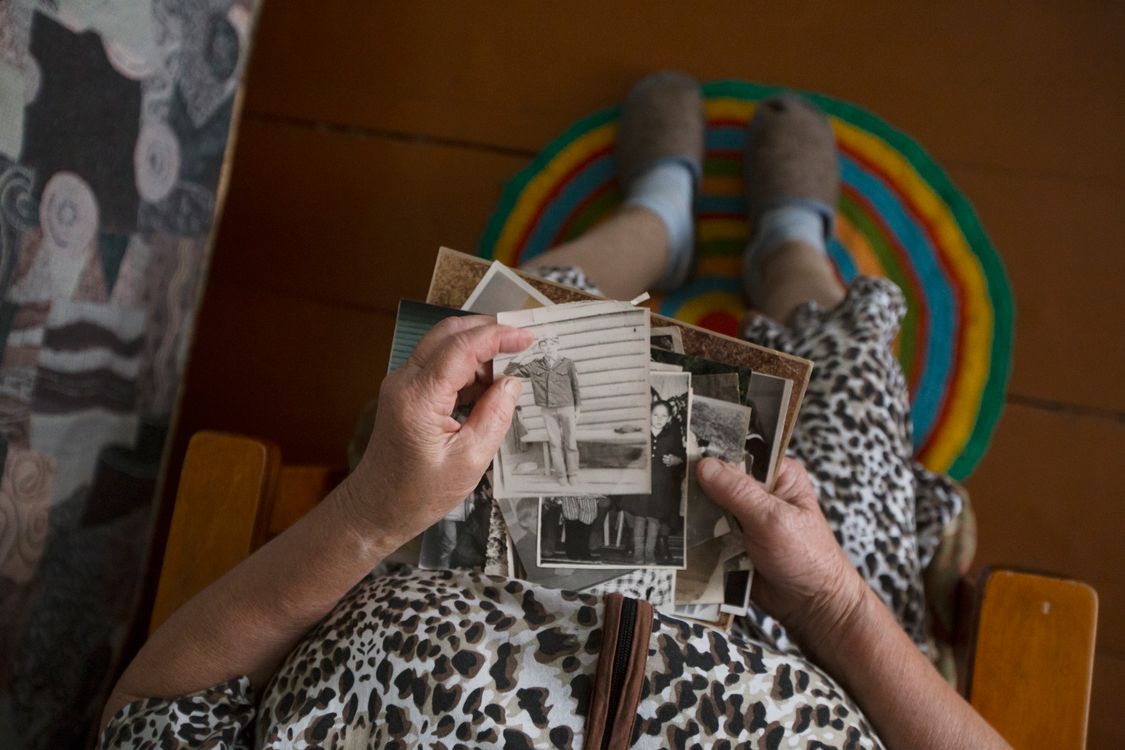
There is a photograph in most families of a wedding nobody can date, in front of a house nobody can place, featuring approximately eleven people of whom perhaps three can be identified. It lives in a biscuit tin. Everyone has seen it. Nobody has ever asked.
And there is exactly one person left who could tell you that the woman on the left, the one with the extraordinary hat, was your grandmother''s aunt, who did not speak to her own brother for nineteen years over a matter concerning a piano.
That person is eighty-four and gets tired around four in the afternoon.
I mention this not to be grim about it, but because families tend to assume the wrong things are at risk. We worry about the dramatic losses — the health, the mobility, the eventual absence. Meanwhile the actual disappearing happens quietly, in the background, in the form of ordinary information that simply stops being available one Tuesday because the only person who had it is no longer taking questions.
What actually goes
Not the big biographical facts. Those survive. There are documents, there is a marriage certificate somewhere, there is a cousin with an interest in ancestry and a subscription to a website.
What goes is the connective tissue.
The recipe with no measurements. Every family has one. It exists entirely in a pair of hands. "A bit of flour, then you feel it." You have watched it made forty times and you could not reproduce it under threat, because what you were watching was not a recipe, it was a person, and the person was improvising.
The language, or what''s left of it. If there was a second language in the house — a proper one, or just the private dialect of endearments and swearing that every family develops — your grandparents are usually where it stops. It rarely survives to the third generation intact. What survives is four words and a feeling that there used to be more.
The version of your parent that existed before you. Your mother at nine. Your father as the difficult one, or the funny one, or the one who couldn''t be got out of bed. This is genuinely unavailable elsewhere. Your parents can''t give it to you — nobody is a reliable narrator of their own childhood, and anyway they were inside it.
And the names. All the names, in all the photographs.
The useful thing psychology knows about this
There''s a well-documented pattern called the reminiscence bump. When older adults are asked to recall their lives, the memories don''t come out evenly distributed. They cluster, densely and vividly, around roughly ages ten to thirty — the years of first everythings, when identity was being assembled and everything was happening for the first time.
Which is enormously practical, if you''re the one asking the questions.
It means that "tell me about your life" will get you a shrug, but "what did you do on a Saturday when you were seventeen?" will get you forty minutes, a name you''ve never heard, a small scandal, and a description of a coat.
Aim your questions at the bump. That''s where the material is stored.
The single afternoon that saves the most
If you do only one thing, do this one, and do it before it becomes urgent.
Take the photographs — the tin, the album, the envelope in the drawer — and sit down beside her with a phone recording audio. Not video. Video makes everyone behave. Audio she''ll forget about in ninety seconds.
Then go through them one at a time and ask three questions about each: Who is this? Where was it taken? What was happening?
That''s it. That''s the whole method.
What you''ll get is not a list of names. What you''ll get is her narrating for two hours, because a photograph is a door and she will walk through every single one of them. You''ll get the piano. You''ll get why nobody speaks to that side of the family. You''ll get her at nineteen, complaining about a dress.
Write the names on the backs in pencil as you go, or in a note on your phone if pencil feels like vandalism. Keep the recording. The recording is worth more than the names, and you won''t understand why for about a decade.
On doing it badly
You will want to do this properly. Good microphone, quiet room, list of prepared questions, some sort of occasion.
Do not do that. The occasion is the enemy. The moment you announce that you''re Recording Her Memories, she becomes a person being interviewed, and people being interviewed are boring, including your grandmother, who is not otherwise boring at all.
Just put your phone on the table, screen down, while the kettle is on. Say you found the photos and can''t work out who anyone is. Ask her to help you, which is true.
The best material in every family recording ever made arrived while somebody was doing something else.
And when they can''t anymore
If you''re reading this later than you''d like — if the memory has already gone soft, if the answers have started arriving in the wrong decade — the afternoon is still worth having. Ask about the bump years anyway. Those are frequently the last to go, long after this morning has stopped sticking.
And ask the other people. Her sister. The neighbour. Your own mother, who knows more than she thinks she does and has never once been asked.
---
Names on the backs of photographs are a start. If you''d like somewhere they can live together — the pictures, the recording, the story about the piano — with room for the rest of the family to add what they remember, that''s what Stella Memoria is for.
Somewhere to keep it
Stella Memoria is a page in memory of someone you loved — their photographs, their story, and what other people remember about them, kept together in one place. You write it a little at a time, and it stays online.