The Shoebox Isn't a Backup. It's a Countdown.
That shoebox of photos in the closet feels permanent. It isn't. Here's what's actually happening to it every year you don't open it — and the thirty-second fix.

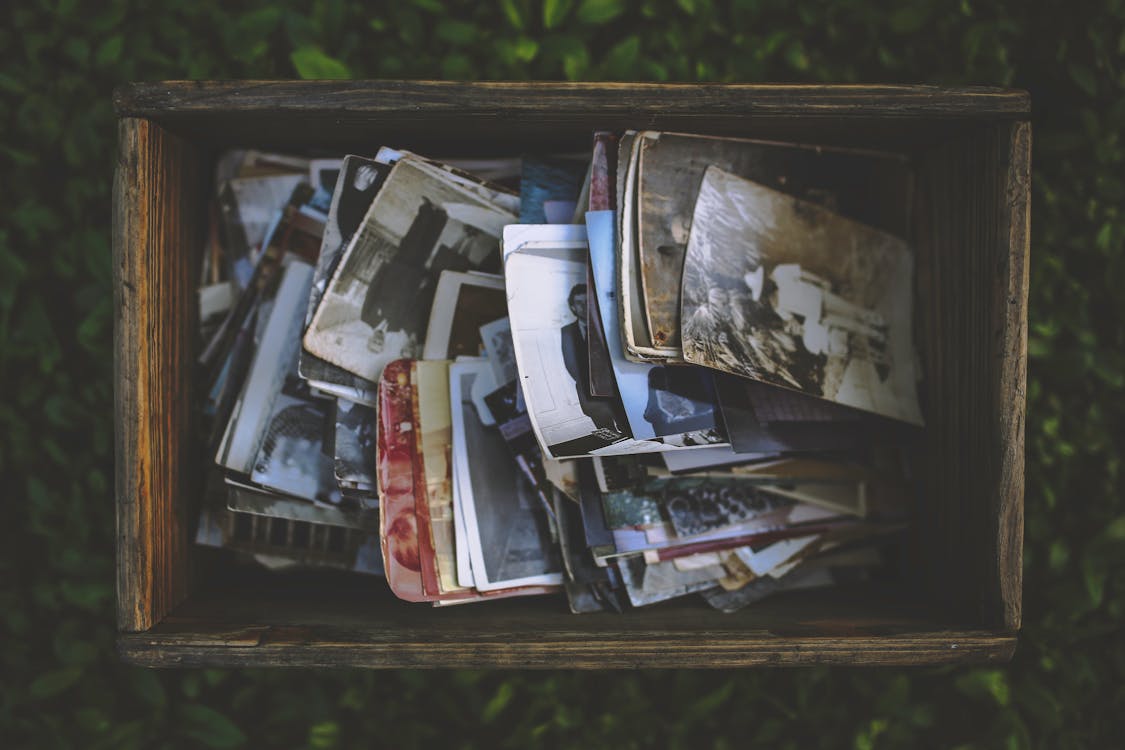
There's a box somewhere in your house — a closet, an attic, the top shelf nobody can reach without a chair — full of photographs nobody's looked at in years. It feels permanent. It's been sitting there for a decade already, hasn't it? What's another ten years going to change?
Quite a lot, actually.
The photo I found half-gone
I pulled a shoebox down from a closet a few years back, mostly out of curiosity, not urgency. Near the bottom was a photo of my grandparents on what I'm fairly sure was their wedding day — except the bottom third had gone a strange yellow-brown, and two faces standing next to them had faded into something closer to a shadow than a person. Nobody could tell me who they were anymore. Not my mother, not my aunt, nobody. Whoever they'd been, that information left with whoever used to know it, and the photo itself had been quietly erasing the evidence for decades without anyone noticing. I remember feeling almost embarrassed, standing there — not sad exactly, more caught off guard, the way you feel when you realize something's been happening slowly, right in front of you, the entire time you assumed it was fine.
What's actually happening inside that box, quietly
Standard printed photos, stored in normal household conditions — not a climate-controlled archive, just a regular attic or basement — start visibly fading within twenty to thirty years. Faster if there's any humidity. Faster still if the box has ever gotten even slightly damp, which most boxes eventually do. Colors shift first. Faces get harder to make out. Eventually, some photos become mostly a stain with a vague human shape in it.
This isn't a dramatic, sudden loss. That's exactly what makes it dangerous — it's not a single afternoon where the box burns or floods (though that happens too, and it's worth saying out loud: fires and floods destroy entire family archives in an afternoon, with zero warning). It's a slow fade you don't notice year to year, until one day you go looking for a specific photo and it's not what you remembered it being.
"I'll deal with it eventually" is doing a lot of quiet damage
Nobody decides to lose their family photos. It just happens by default, through years of not-quite-getting-around-to-it, while the box sits there looking exactly as permanent as it did last year. It isn't. It's just fading slower than you can see.
The fix takes less time than reading this article
You don't need a scanner, a weekend, or a system. Open the box. Pick up a photo. Take a picture of it with your phone — flat surface, decent light, done. That's it. That one photo now exists in at least two places, one of which can't fade, flood, or burn.
You don't have to do the whole box today. You have to do one photo today. The rest can wait. The one you'd actually mind losing can't.
A small trick that changes everything
Don't try to digitize the whole box in one sitting — that's exactly the kind of project that gets started once and abandoned. Instead, photograph one photo a day. Thirty days, thirty photos, permanently saved, with zero pressure and zero burnout. Slow beats never.
---
Once photos are digitized, Stella Memoria gives them — and the stories behind them — a permanent home the whole family can add to. Not just saved. Kept alive.
To send it to someone, or to post it.