A Memorial Page for a Baby Who Died Too Soon
A few photos, so little time together. Gentle ideas for a memorial page for a stillborn baby or infant: name, footprints, letters, siblings, 15 October.

People will sometimes say, meaning well, that there is not much to remember. They are wrong, and you know they are wrong, but it is hard to argue with someone while you are holding a hospital blanket that still smells like the room.
When a baby dies before or shortly after birth, you are left with a love the size of a whole life and a memory box the size of a shoebox. The mismatch is its own particular ache. The question of what to put on a memorial page can feel almost absurd. What do I write? He never had a favourite anything.
But he had a name. She had a weight, a time of birth, a shock of dark hair or none at all. They had you. That is not nothing. That is everything a beginning is made of.
Start with the name
Say the name. Write it at the top in whatever letters you like. Many parents tell me the thing they fear most is that no one will ever say their baby's name again, that it will slide politely out of conversations the way people slide around a puddle.
A memorial page puts the name somewhere it can be seen, said and returned to. Add the date. Add the weight in pounds or grams, whichever your grandmother would understand. Add the time, if you know it. These are small facts, but they are facts, and facts are how the world agrees that something happened.
The photographs you have are enough
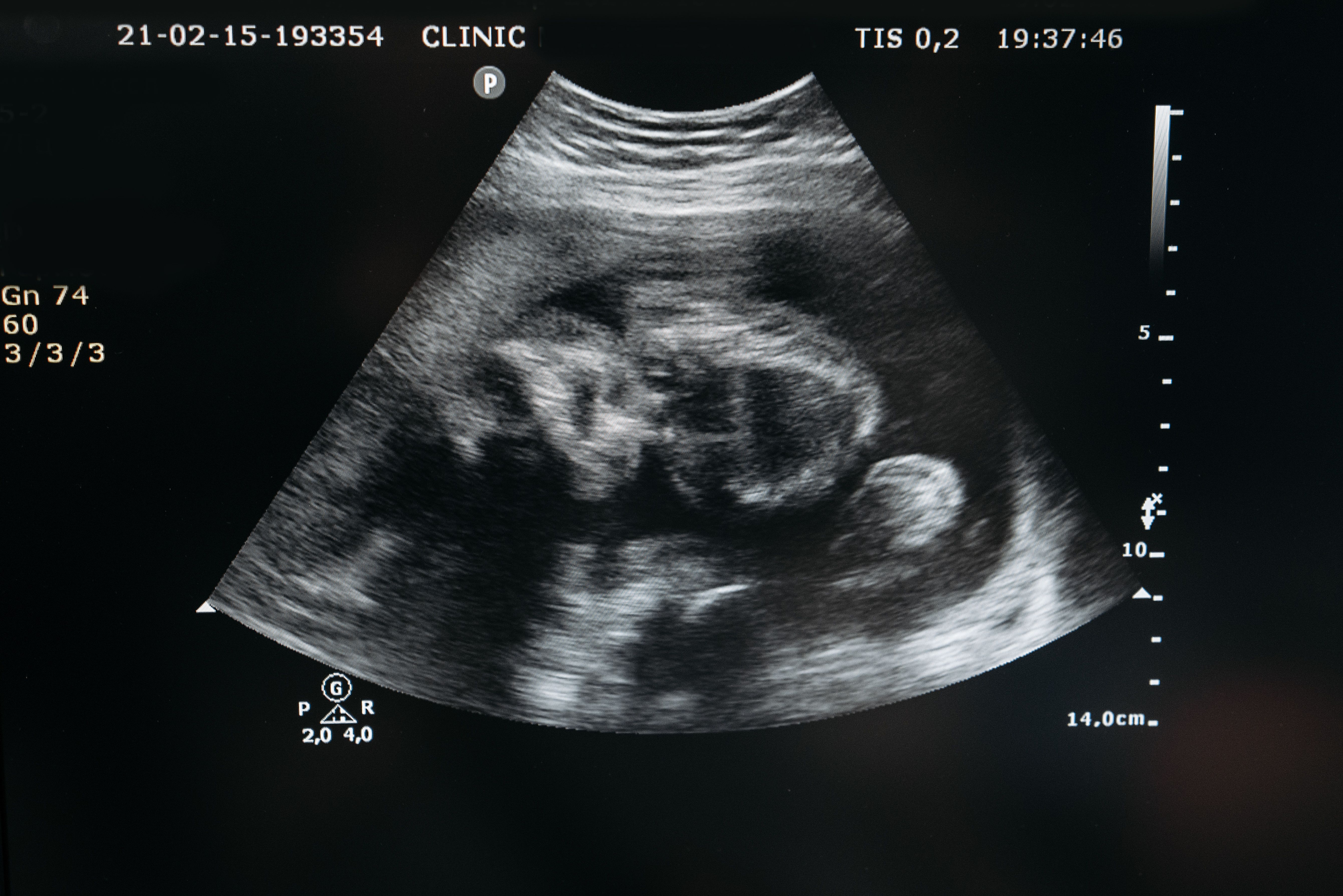
Maybe you have three photographs. Maybe one, taken on a phone by a kind midwife while you couldn't lift your arms. Maybe the only images are from an ultrasound, grey and grainy, a profile you studied for weeks.
All of these belong on the page. The ultrasound too. It is not a lesser picture; it is the first picture.
If you're hesitating, there's some reassurance in the research. A 2023 systematic review in the journal Women and Birth, led by the Australian psychologist Melissa Oxlad, brought together twelve studies of parents' experiences with photography after stillbirth. Parents described the images as lasting proof that their child existed, and as a way to share their baby with the people in their lives. Many who hesitated at first were later glad to have them.
So include the blurry one. Include the one where your hand is bigger than the whole of them. Nobody looking at it will be thinking about the lighting.
Footprints, bracelets, and the things that fit in a palm
Some of the most precious objects in this kind of loss are tiny: the ink footprints, a hospital bracelet with a handwritten label, a knitted hat, the card with the cot number. Photograph them or scan them. A memorial page can hold them in a way a drawer can't, a way you can show your sister on the other side of the world, or open on your own at three in the morning without having to go into the room where the box is kept.
You might also write a short list: things we bought for you, the song we played in the car, what we had planned for your first summer. Plans are memories too. They are the memories of a future you loved in advance.
Write the letters
If there is too little life to write about, write to.
A letter to your baby is one of the most common things parents add, and one of the most honest. It doesn't need to be elegant. It can be two lines:
"You had your dad's chin. I'm sorry you didn't get more time with it."
It can be long, and angry, and tender, and full of ordinary news from home. You can add a new one each year on their birthday. The page becomes a quiet correspondence, one-sided but not unanswered, because every letter is evidence that the love is still ongoing.
The people who held them
Make a list of everyone who held your baby, or saw them, or cared for them. The midwife who sang. The grandparent who came straight from the airport. The chaplain. The nurse who said the name without being asked.
These people were part of the only gathering your child ever had. Invite some of them to write a sentence or two on the page. It turns a private loss into a shared one, which is, I think, the whole purpose of remembering out loud.
Making room for siblings
Older siblings have their own version of this story, usually more practical than ours. Children will ask whether the baby can have their old teddy, or whether babies in heaven have teeth. Let them contribute in their own way: a drawing, a photograph of a stone they painted, a few words they dictate to you.
"I would have taught her to jump off the sofa."
Siblings who come later can grow up knowing there was someone before them, not as a sad secret but as a member of the family with their own page. When they are old enough, they can contribute too.
A date to return to: 15 October
Every year, 15 October is observed in many countries as Pregnancy and Infant Loss Remembrance Day. At 7pm local time, people light a candle and let it burn for at least an hour; as the evening moves across time zones, this creates what is called the Wave of Light, a ring of small flames moving around the world.
You might light yours, then add a photograph to your baby's page, with a line about the year. Over time, those candles become their own record: here is how we remembered you, again and again.
A small place that stays
Stella Memoria was made so that every life, however brief, can have a place that holds it: the name, the pictures, the footprints, the letters, a recording of the lullaby you sang, and the words of the people who were there. A memorial page doesn't need a long life to fill it. It only needs someone who loves the person enough to say they were here. If you'd like to make one for your baby, you can create a lasting memorial here.
— Alina Irene
---
To send it to someone, or to post it.