The First Christmas Without Them
The ornament box, the stocking, the song in the supermarket. Honest, small ways to get through the first Christmas without someone, and keep them in it.

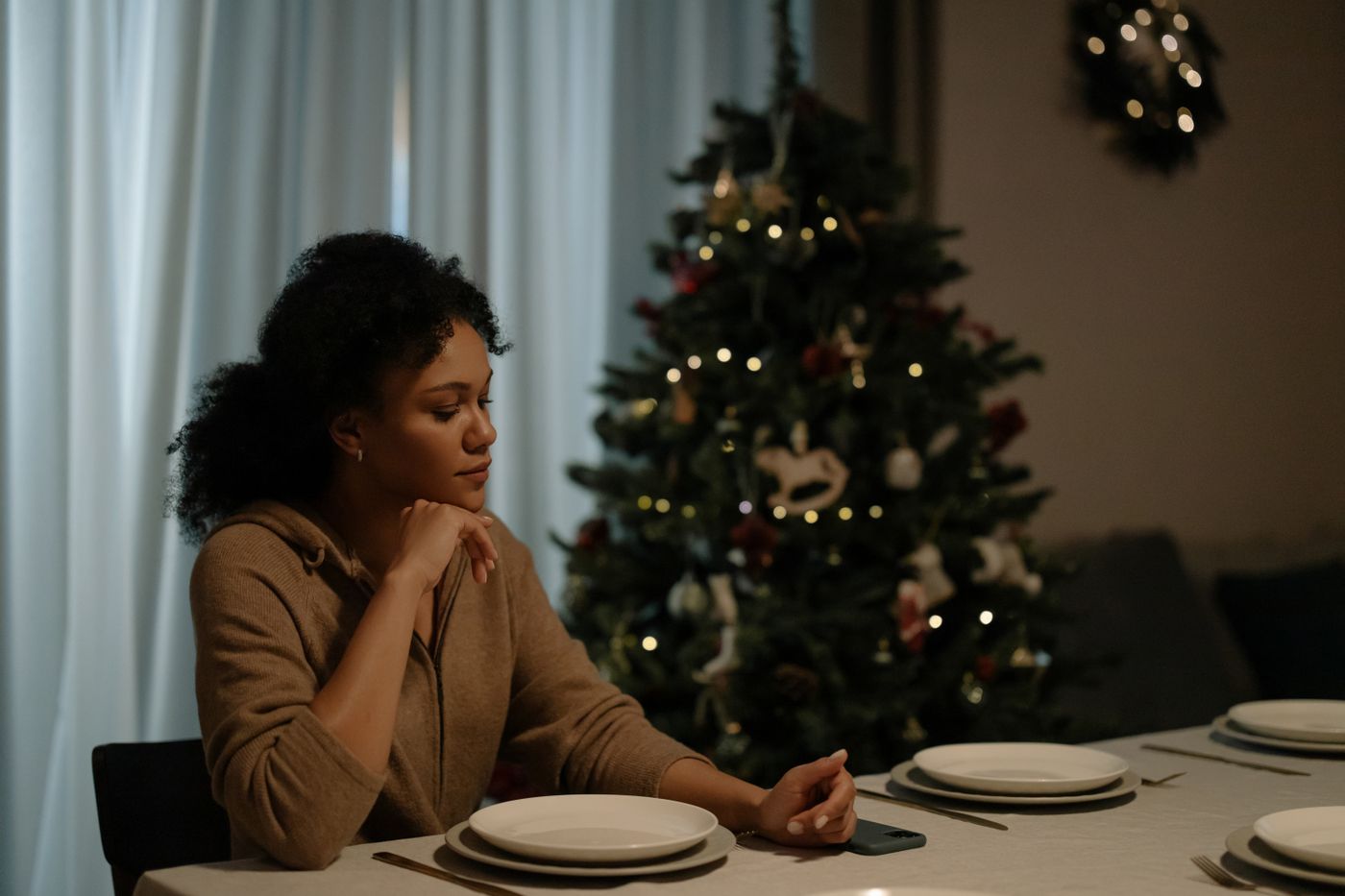
It usually starts in a supermarket in early November. You are reaching for the milk, and somewhere above you a speaker starts playing the song. You know the one. The one he sang badly, on purpose, every year, while untangling the lights. And you are standing in the dairy aisle with your eyes stinging, and a teenager stacking yogurt is pretending very politely not to notice.
The first Christmas without someone does not arrive on December 25th. It arrives in pieces, for weeks. The first catalogue in the mail. The first time someone at work says "Got any plans for the holidays?" The first Christmas card addressed to both of them.
The box in the attic
Then there is the box. Every family has one. Ornaments wrapped in newspaper from 1997, a clay star someone made in kindergarten, the angel with one wing that nobody has had the heart to throw out.
Opening that box the first year is its own small event. Some people can't do it, and leave the tree bare, or buy all new decorations so nothing in the house has a history. Some people do it alone, at midnight, so nobody sees. Some make the whole family do it together and cry into the tinsel.
"I bought a tree and then left it undecorated for eleven days," a reader wrote to me. "My daughter finally did it while I was at work. I came home and she'd put Dad's awful reindeer right at the front. I was furious for about a minute. Then I wasn't."
What the stories do
In the early 2000s, two researchers at Emory University, Marshall Duke and Robyn Fivush, asked children a list of simple questions about their own families. Where did your grandparents grow up? Do you know how your parents met? Do you know about an illness or something really terrible that happened in your family? The children who knew more of those stories showed more confidence and coped better with difficult times.
Christmas is the one time of year when most families still tell stories out loud. Which means it is also the time when the stories of the person who is missing are most at risk of stopping, or most likely to be told one more time, if someone starts.
Small things that help
Decide one thing in advance, and only one. Whether the stocking goes up. Who sits where. Whether you still watch the film he always fell asleep in. You don't have to plan the whole day. One decision made in October is one less ambush in December.
Keep one tradition exactly as it was. Change one completely. Families that try to keep everything the same often find the empty place too sharp. Families that change everything often feel they've lost the person twice. One of each is a reasonable truce.
Give their presence a job. Buy the gift they would have bought for someone, and give it "from Grandpa." Donate to the thing they cared about. Make the terrible fruitcake nobody ate.
Ask everyone for one memory, and write them down. At the table, or in the car on the way home, or in the family group chat on Boxing Day. Christmas makes people talkative. Use it.
A reader named Karen wrote to me about the ornament box:
"My mum labelled every ornament. Tiny paper tags, in her tiny handwriting: 'Karen, age 4, sticky.' 'From Auntie June, the year she moved abroad.' 'Bought at the market in 1983, before your father proposed, he didn't know yet.' I'd seen those tags my whole life and never read them properly. The first Christmas without her I sat on the living room carpet and read every single one. There were sixty-three. I realised she hadn't been labelling decorations. She'd been writing our history, one ornament at a time, and hiding it in a box we opened once a year. I photographed every tag that night, with the ornament next to it."
A place for the tags
Most funeral homes offer an online tribute page, and in the first days it matters enormously: the notice, the service, the messages from people who couldn't come. What comes later can sit alongside it: a December night on the carpet with sixty-three paper tags, for instance.
That's why Karen put the photographs on Stella Memoria: a memorial page where the whole family can add what they have, from wherever they are, and that stays. Her brother, who lives abroad, added the story behind the 1983 ornament, which even Karen didn't know. Next Christmas, her children will be able to read the tags without anyone having to climb into the attic.
What you can do this year
If this is the first Christmas without them, there is no correct way to do it. Do less. Do it differently. Cry in the dairy aisle if you need to; the teenager stacking yogurt has seen worse. But if you can manage one thing, let it be this: before the decorations go back in the box, get the stories out of it. The box will come down again next year. Make sure the stories are somewhere you can find them any day of the year.
To send it to someone, or to post it.