The Box You Never Opened: How to Preserve and Digitize Old Family Photos
You keep meaning to open that box of old photos "later." Here's how to actually preserve and digitize old family photos before they fade, and why later never arrives on its own.

The Box You Never Opened
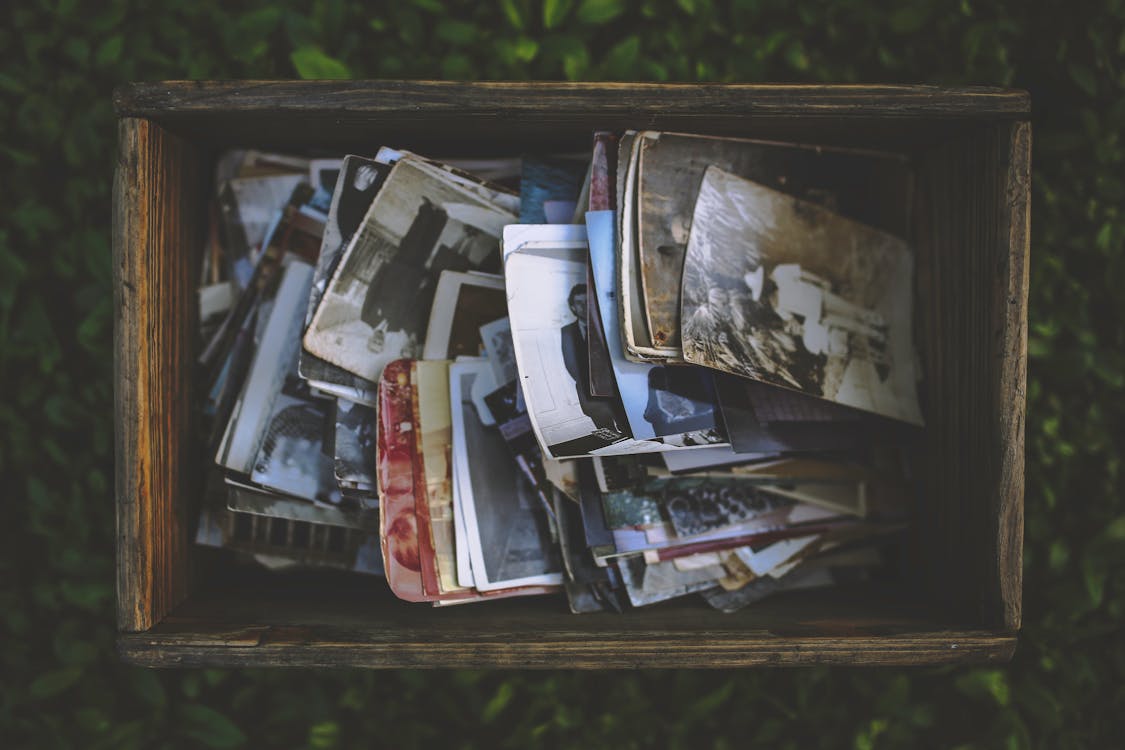
There's a box somewhere in your house. You know the one. Maybe it's a shoebox, maybe it's one of those plastic bins with a lid that never quite fits back on... maybe it's not even a box, just a folder on your phone you scroll past on your way to something else. Wherever it is, you know exactly what's in it, and you also know you haven't opened it in a while.
You keep meaning to. That's the strange part. It's not that you've forgotten — it's that you've built an elaborate system of later. Later, when you have more time. Later, when you're ready to look at all of it at once instead of in pieces. Later, when it won't feel like reopening something.
Here's what nobody tells you: later doesn't actually arrive on its own. It has to be built, on purpose, in small pieces you can actually carry.
Why the box stays closed
It's not laziness, and it's not avoidance either — not exactly. There's a specific kind of overwhelm that comes from facing hundreds of unsorted photos, and it has a name in psychology: the paradox of choice. When you're handed too many options with no structure — which photo, which memory, where to even start — the brain doesn't relax into possibility. It shuts down. It picks "none of these, not right now" as the easiest option, over and over, until the box has been sitting there for three years.
That's not a character flaw. That's just how the mind protects itself from a decision it doesn't have the scaffolding to make yet.
What actually gets people to open it
The people who do eventually open the box almost never say "I finally felt ready." They say something smaller. More like: "I was looking for one specific photo for something else, and I just... kept going." Or: "My daughter asked what he sounded like, and I realized I didn't have an answer ready, so I went looking."
It's never the whole box. It's one small, specific reason to reach for one small, specific thing.
So if you're standing in front of your own version of this box, here's a gentler way in than "sort everything":
Pick one person, not one hundred photos. Not "organize the box" — just "find three things that remind me of my father specifically." A narrower door is easier to walk through than a wide one.
Let the story come out of order. You don't need a timeline. You don't need captions. A photo from 2003 next to one from 1987 is fine — memory doesn't file itself chronologically either, and there's no rule that says yours has to.
Write while you're looking, not after. The moment you're holding a photo and something surfaces — a smell, a sentence they used to say, a completely unrelated memory it happens to unlock — write that down right there. Not later, not "cleaned up." The rough version is usually the true one.
Give yourself a stopping point in advance. Fifteen minutes. One drawer. One folder. Not "until it's done" — because it's never quite done, and that's fine.
The thing about digital boxes
If your box is actually a phone — thousands of photos, no folders, no order — the overwhelm is the same, just with better lighting. A few practical anchors: search your photos app for a name or a place, not a date, since most people remember where before when. Star or favorite anything that stops you for even a second, even if you don't know why yet — you can ask why later. And don't try to back everything up in one sitting; back up whatever you've already gathered as you go, so a phone crash doesn't undo an afternoon of work.
None of this fixes the box in one sitting. It just makes the next fifteen minutes possible, which is the only unit of time that actually matters here.
---
A quiet note: I built Stella Memoria because I had my own version of this box — my father's, mostly photographs, mostly out of order — and I kept meaning to get to it "later" for longer than I'd like to admit. If you'd rather have somewhere to put the pieces as you find them, instead of waiting until you've found them all, that's exactly what it's for.
Related articles
The Coat I Almost Gave Away
A folded grocery list in a coat pocket, two years after he died. The objects we almost give away are often the last place their handwriting survives.
The Phone That Wouldn't Unlock
Locked out of a parent's phone after death: what digital estate planning solves, what it doesn't, and why unlocking an account is not the same as remembering someone.
The Only Photo of Me and My Mother at Five Years Old Is Gone
A five-minute mistake, and one photograph, gone for good. Here's what it taught me about the difference between having a memory and actually keeping it.